Isaiah 45:1,4-6/ Ps. 95:1,3-5,7-10 / 1Thes. 1:1-5b/ Matthew 22:15-21
Dear brothers and sisters in Christ,
Each of us belongs to many communities. We belong to a family, a parish, a nation and various organisations. These relationships bring responsibilities, loyalties and expectations. Yet beneath all these forms of belonging lies a deeper truth: before we belong to anyone else, we belong to God. Our readings invite us to reflect on this fundamental relationship and to allow it to shape every other relationship in our lives.
In our first reading, the Book of Isaiah presents a remarkable figure: Cyrus, the king of Persia. He did not belong to the people of Israel, nor did he share their covenantal faith. Nevertheless, God chose him as an instrument through whom the Jewish exiles would be released from Babylon and enabled to return home.
The extraordinary feature of this passage is that God calls Cyrus his “anointed”. This title, associated with those entrusted with a particular mission, is here applied to a foreign ruler. The emphasis falls on God’s sovereign freedom: he can work through someone who does not yet recognise him to accomplish his purposes of liberation and restoration.
This challenges us to recognise that God’s providence extends beyond the boundaries of our expectations. We must never imagine that goodness exists only among those who belong to our own religious community, culture or circle of friends. The God whom we worship can prepare help for us through unexpected people. Sometimes, the person we are tempted to dismiss becomes the person through whom God answers our prayer.
For a people wounded by exile, the message concerning Cyrus was a proclamation of hope. Their captivity would not have the final word. The powers that appeared to control their destiny remained subject to the Lord of history.
We, too, can experience forms of exile: prolonged illness, bereavement, disappointment, uncertainty about the future, or the painful feeling that our lives have become trapped. The first reading invites us to trust that God continues to work even when we cannot discern his hand. His silence does not mean that he has forgotten us. His help may already be taking shape beyond what we can see.
At the same time, Cyrus reminds us that authority carries a responsibility to serve. Political power finds its proper purpose in protecting human dignity, promoting justice and creating conditions in which people can live in peace. Those who govern are accountable for how they treat the people entrusted to their care.
This prepares us for the encounter in today’s Gospel.
The Pharisees send their disciples, together with the Herodians, to question Jesus. They begin with flattering words, acknowledging his integrity and the truthfulness of his teaching. Yet their apparent admiration conceals a hostile intention. They speak respectfully while seeking a way to destroy him.
There is already an invitation here to examine our hearts. Do our words correspond to our intentions? Do we praise people sincerely, or sometimes use kindness to conceal resentment, gain an advantage or manipulate a situation? Christian integrity requires harmony between what we profess outwardly and what we harbour within.
Their question is carefully calculated: should they pay the tax to Caesar?
An affirmative answer could expose Jesus to the anger of those who resented Roman occupation. A negative answer could expose him to an accusation of encouraging resistance against imperial authority. His questioners seek to force him into a choice that will make him vulnerable whichever answer he gives.
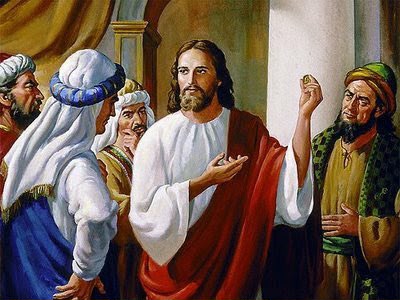
Jesus recognises their intention. He asks them to produce the coin used for the tax and directs their attention to its image and inscription. When they identify the image as Caesar’s, he replies: “Give back to Caesar what belongs to Caesar—and to God what belongs to God.”
His answer does more than escape a trap. It opens a question that reaches into the deepest meaning of human life.
The coin bears Caesar’s image. But whose image do we bear?
The Book of Genesis supplies the answer: we are created in the image and likeness of God (Genesis 1:26–27). Read in that light, the Gospel invites us to recognise that, while the coin bears the emperor’s image, the human person bears the image of the Creator.
Caesar may receive the tax that is due. God is owed the gift of our whole selves.
This does not mean that God regards us as objects to possess. Our belonging to him is the belonging of creatures sustained by their Creator, of children cherished by their father, of people called into communion with the One who gives them life. To give ourselves to God is to respond freely to the love that first called us into existence.
We therefore cannot reduce our relationship with God to an occasional prayer, a Sunday obligation or a contribution placed in the collection basket. These are meaningful expressions of faith, but the Lord seeks the heart from which they arise. He asks that our worship shape our decisions, our relationships, our work and our use of the gifts entrusted to us.
We give God our minds when we seek truth. We give him our voices when we speak honestly and defend those who cannot defend themselves. We give him our hands when we serve. We give him our time when we listen patiently. We give him our hearts when we forgive, even when forgiveness is costly.
And because every human person bears God’s image, our devotion to God must influence how we treat others. We cannot honour the Creator while deliberately humiliating his creatures. The dignity of the poor, the sick, the stranger, the unborn, the elderly and the dying places a claim upon our conscience. Their worth does not depend on their strength, usefulness, wealth or social position. It rests in the God whose image they bear.
This is especially important wherever suffering makes a person feel forgotten. A patient who can no longer work remains precious. An elderly person who needs constant assistance remains precious. A dying person whose voice has grown weak remains precious. To remain beside them with compassion is one way of giving to God what belongs to God.
Jesus’ words also clarify our responsibilities within society. Faith calls us to be conscientious citizens: to fulfil legitimate civic duties, respect just laws, work honestly and contribute to the common good. Paying what we owe and using public resources responsibly are matters of moral integrity.
Yet political authority is never absolute. Caesar, too, stands before God. No government, party, leader or ideology can claim the unconditional allegiance that belongs to the Lord.
Our loyalty to our country must therefore be guided by a conscience formed through the Gospel. Where human demands contradict God’s law or violate human dignity, Christians must remain faithful to God, seeking to bear witness with courage, wisdom and charity.
The martyrs show us the cost that such fidelity can demand. Their witness asks us whether there are loyalties we have allowed to become greater than our commitment to Christ. Would we defend injustice because it benefits our political party, our family or our own position? Would we remain silent before wrongdoing because speaking truth might cost us acceptance?
The pressure to compromise does not come only from political authority. It can arise within our workplaces, friendships, families and wider culture. We may be encouraged to treat dishonesty as necessary, corruption as normal, revenge as strength, or indifference as a reasonable way of protecting ourselves.
Slowly, we can begin to organise our lives around the desire for approval, comfort, influence or wealth. These things then shape our choices more powerfully than the Gospel.
Today, Jesus invites us to ask: Whose image am I allowing my life to reflect?
When people encounter us, do they find something of Christ’s patience, truthfulness and mercy? Is our faith visible in the way we treat those who can offer us nothing in return? Does our Christian identity reach into the places where our decisions are made?
Saint Paul offers a beautiful picture of such a life in the second reading. He remembers the Thessalonians’ faith expressed in action, their labour of love and their endurance sustained by hope in Jesus Christ (1 Thessalonians 1:3).
These three virtues describe a faith that has taken root.
Faith becomes active when trust in God influences our conduct. Love becomes labour when it asks something of us: the effort of caring for a sick relative, the patience of raising children, the courage of reconciliation, or the quiet perseverance of serving without recognition. Hope becomes endurance when we continue to trust the Lord through circumstances we cannot immediately change.
Such endurance makes room for tears, questions and weariness. It brings them into the presence of God and continues to seek his grace. The Christian who struggles and still prays, who grieves and still loves, who grows tired and still tries to do good, is already bearing a powerful witness.
Paul also reminds the Thessalonians that the Gospel came to them through the power of the Holy Spirit. Our response to God begins within the grace he gives us. We are able to love because we have first been loved. We are able to persevere because the Lord continues to sustain us.
This gives depth to our celebration of Mission Sunday.
Mission begins with belonging to Christ and allowing that belonging to become visible. The Church proclaims the Gospel through her preaching, prayer, sacramental life and service. Each baptised person shares in that mission according to the gifts and circumstances of his or her life.
A family becomes a place of mission when its members learn to forgive. A hospital becomes a place of mission when the suffering are treated with tenderness and dignity. A workplace becomes a place of mission when honesty is upheld despite pressure to compromise. A parish becomes a missionary community when it welcomes the stranger, supports the vulnerable and reaches beyond its own comfort.
Our prayer and material support for missionaries express this same responsibility. We belong to a Church whose concern extends beyond our own community. The gifts we have received are entrusted to us for the good of others, including those whom we may never meet.
We must therefore ask ourselves: does our way of life help others encounter the Lord? Do our words make faith credible? Do people experience the Church’s compassion through us?
At this Eucharist, we receive the source of our strength for this mission. Christ gives himself to us, drawing us into his own offering to the Father. The One who calls us to give ourselves has first given himself completely.
As the bread and wine are brought to the altar, let us place before God our lives as they truly are: our work and responsibilities, our hopes and disappointments, our wounds and unfinished struggles. Let us bring him the areas we readily surrender and those we still find difficult to entrust to him.
The Lord receives this offering and draws us more deeply into his life, so that we may return to our families, communities and workplaces ready to serve.
Dear brothers and sisters, the question Jesus asks about the coin becomes a question addressed to each of us: “Whose image is this?”
We bear God’s image. We belong to him. May that truth govern our loyalties, deepen our compassion and renew our commitment to the mission of the Church.
Let us fulfil our responsibilities with integrity, serve our neighbours with generosity, and give the Lord the hearts he has created for himself.

