Isaiah 52:13-53:12/Ps. 30:2,6,12-13-15-25/Heb.4:14-16;5:7-9/Jn.18:1-19:42
A Call to Deep Conversion
Today, the Church stands still. There is no Eucharistic celebration. The altar is bare. The tabernacle is empty. The silence itself preaches. Good Friday is not simply a remembrance – it is a confrontation. We are brought face to face with the mystery of suffering, sin, and redemption.
The First Reading presents to us the Suffering Servant- unrecognized, rejected, despised. He comes without outward glory, without signs that would attract human admiration. And yet, he carries the weight of his people. What is most striking is not just his suffering, but the blindness of those around him. They saw him but did not perceive him. They encountered him but did not understand him.
This prophecy finds its fulfillment in Jesus Christ. He came to his own, and his own did not receive him. But more painfully, they did not just ignore him – they rejected him, accused him, condemned him, and led him to death.
Good Friday invites us to move beyond observation into participation. The Passion is not a distant story; it is our story.
Let us look carefully at the characters in the Passion, because in each of them, we may recognize something of ourselves.
Judas Iscariot walked with Jesus, listened to him, shared meals with him- yet he betrayed him. Judas did not begin as a traitor; he became one gradually. Perhaps through small compromises, hidden disappointments, attachment to money, or unspoken expectations. His tragedy is not only betrayal, but despair. After realizing his sin, he could not trust in mercy.
How often do we do the same? We betray Christ not with thirty pieces of silver, but with small daily choices – dishonesty, neglect of prayer, indifference to others, secret sins we justify. And like Judas, we sometimes believe our sins are too great to be forgiven. Good Friday reminds us: no sin is greater than God’s mercy – unless we refuse to accept it.
Peter, on the other hand, also failed. He denied Jesus three times. But Peter’s story did not end in despair- it led to repentance. He wept bitterly. The difference between Peter and Judas is not the gravity of their sins, but their response to failure. Peter trusted that even in his weakness, the Lord could restore him.
This is a powerful lesson for us. When we fall, do we run away like Judas, or do we return like Peter?
Then there is Pontius Pilate – a man who knew the truth, who recognized Jesus’ innocence, yet lacked the courage to stand by it. He washed his hands but could not wash his conscience. Pilate represents those moments when we choose convenience over truth, when we remain silent in the face of injustice, when we avoid doing what is right because it is difficult.
How often do we “wash our hands” in our daily lives? When we fail to defend the truth, when we ignore the suffering of others, when we prioritize comfort over conscience.
We also see the crowd, once shouting “Hosanna,” now crying “Crucify him!” The crowd is unstable, easily influenced, driven by emotion rather than conviction. It reminds us how easily we can be swayed by public opinion, by trends, by fear of rejection.
And yet, in the midst of all this darkness, there are also lights.
There is Simon of Cyrene, compelled to carry the cross. At first, it was forced upon him, but in that moment, he shared in the burden of Christ. Sometimes we too are called to carry crosses we did not choose—family struggles, illness, disappointments. But these crosses, when united with Christ, become paths to grace.
There is the Good Thief, who, in his final moments, recognizes his own sin and the innocence of Jesus. With humility, he turns to Christ and says, “Remember me.” And in that moment, paradise is opened to him. This is the power of last-minute conversion, the hope that it is never too late to turn back to God.
And finally, there is Mary, standing at the foot of the cross – silent, faithful, present. She does not run away. She does not protest. She remains. In her silent suffering, she teaches us the courage of fidelity, the strength of love that does not abandon.
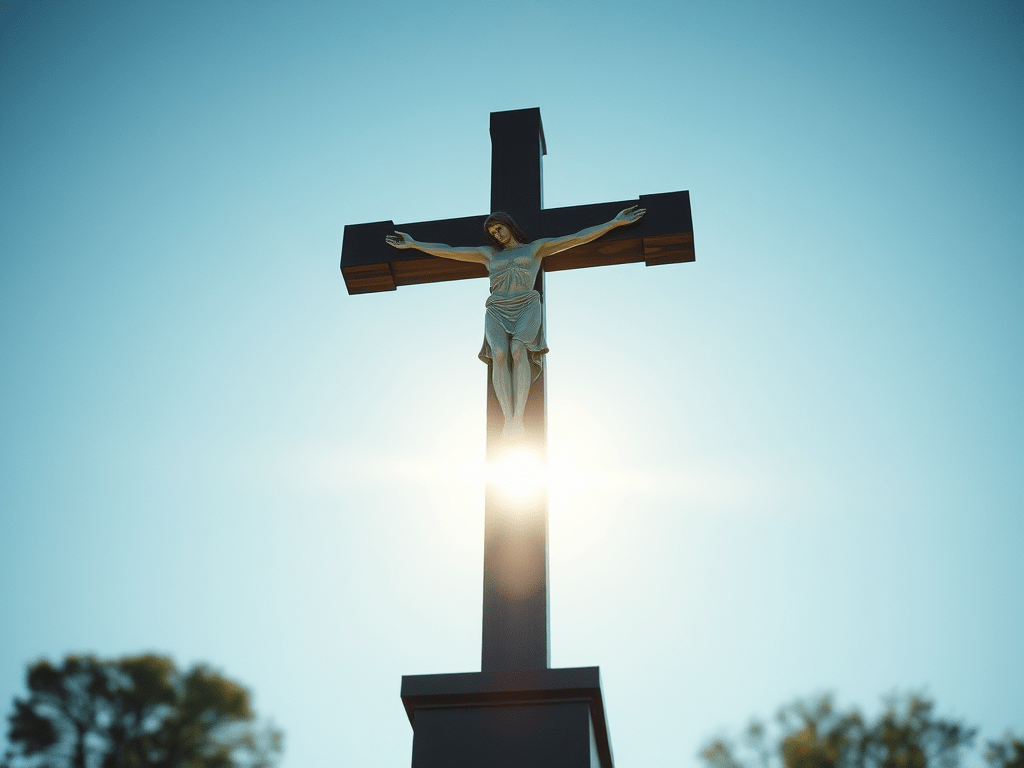
As we gaze upon the crucified Christ today, we must resist the temptation to feel only pity for him. Good Friday is not about feeling sorry for Jesus – it is about recognizing that it is our sins that nailed him to the cross.
Every act of pride, every lie, every injustice, every moment we turn away from God- these are not abstract realities. They are part of the weight of that cross. And yet, the cross is not only a sign of sin – it is the greatest sign of love.
Jesus does not hang on the cross as a victim of circumstances. He hangs there as an offering. “Father, into your hands I commend my spirit.” Even in suffering, there is trust. Even in death, there is surrender. So today, we are invited not just to mourn, but to respond. Good Friday calls us to conversion – not superficial regret, but a deep turning of the heart.
Let us bring our sins to the foot of the cross – not to be crushed by guilt, but to be transformed by grace. And as we resolve to turn away from sin, let us remember it is not by our strength, but by God’s grace that we are sustained.
Today, we kneel before the cross. Tomorrow, we wait in silence. But we do so with hope—because beyond this sorrow lies the promise of resurrection.
 ANNUNCIATION DAILY ROSARY REFLECTION