1Samuel 4:1-11/Ps. 43:10-11,14-15,24-25 /Mark 1:40-45
In the time of Jesus, a leper lived a life of enforced distance—cut off from family, worship, and hope. The Law demanded separation. Yet this man dares to cross the boundary. He shows a faith that is both humble and bold when approaching Jesus. He says, “If you want to, you can make me clean.” He does not doubt Jesus’ power; he wonders about Jesus’ heart. Will you want me?
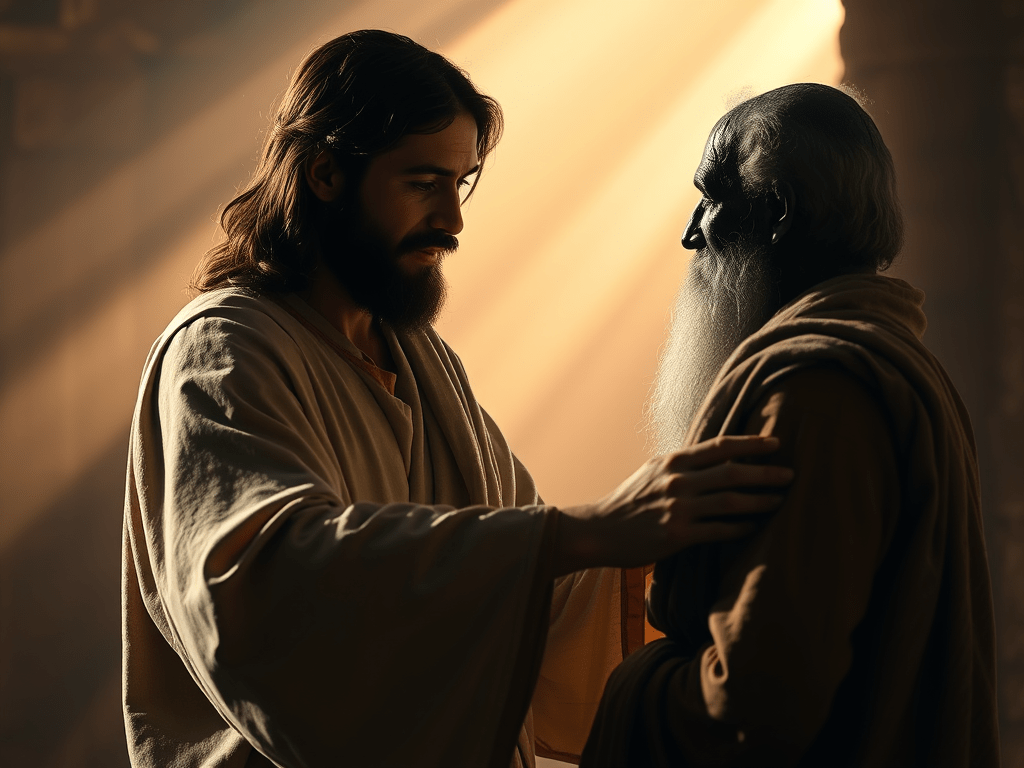
What follows is one of the most tender moments in the Gospel. Jesus does not step back. He does not heal from a safe distance. He stretches out his hand and touches the man. This touch is not only physical; it is deeply human and profoundly divine. Before the leper is cured, he is welcomed.
Before he is made clean, he is loved. Here is the first invitation for us. Where are the places in our lives that we keep hidden? We hide them because we think they are untouchable. The habits we are ashamed of, the wounds that still ache, and the relationships that feel broken beyond repair.
Others may recoil from these places—even we ourselves do—but the Lord does not. For Jesus, these are precisely the spaces where his healing power works most freely.
After the healing, Jesus asks the man for silence. Not because healing is unimportant, but because Jesus refuses a shallow popularity that misunderstands his mission. Love, for Jesus, is not a spectacle; it is obedience to the Father. Yet the man can’t contain his joy. He speaks everywhere—and the cost falls on Jesus. Now Jesus must remain outside the towns, living in the isolation from which the leper had been freed.
This reversal reveals the heart of the Gospel: Jesus takes our place. He bears the cost of our healing. He steps into our exclusion so that we may be brought back in. This is the pattern of Christian discipleship. To follow Christ is to risk inconvenience, misunderstanding, and even loss, so that others may live.
Practically, this challenges us: Who are the “untouchables” of our time? The lonely elder no one visits, the difficult colleague everyone avoids, the family member written off as hopeless. To touch them might not mean using a physical hand. It could be a listening ear. It might be a patient presence. Sometimes, it’s simply a refusal to walk away.
The leper teaches us courage-the courage to approach Jesus as we are. Jesus teaches us compassion-the courage to touch where others fear. If we dare to come close to him, he will touch our lives where we are, as we are. And in that touch, life begins again.
 ANNUNCIATION DAILY ROSARY REFLECTION