Acts 4 : 8 – 12/Psalm 117 : 1,8-9,21-29/1John 3 : 1 – 2/John 10 : 11 – 18
The first reading from the acts of the apostles is part of Peter’s speech to the council following the arrest of Peter and John. The religious authorities ask Peter by what power or name did he heal the crippled beggar. We need to keep in mind that this is the same Peter who had just few days ago abandoned Jesus in the garden of Gethsemane and then denied knowing Jesus three times. And now Peter wasn’t facing simple common people instead he was facing the strong and powerful.
Peter denies that he and John performed magic, that they are involved with evil spirits, or that the cure was a hoax. The man was healed purely by the name of Jesus Christ of Nazareth who though killed unjustly by the leaders has now resurrected from the dead. Peter uses the analogy of a cornerstone to support his point of Jesus being the Promised Messiah.
In its original context the “rejected stone” may have referred to Israel, hated by the nations but chosen by Yahweh. The builders who rejected the stone as unfit would most likely be other nations who built their own empires and worshipped their own gods.
Beloved in Christ, where others saw people of no significance, He saw them same people as having much to teach the rest. Whenever, we see people with the Lord’s eyes and relate to them accordingly, we help them become all that God wants them to be, like the cripple beggar in the first reading, who through Peter’s presence to him got his healing. “Salvation is found in no one else” as Peter says “for there is no other name under heaven given to mankind by which we must be saved”, Salvation is only through personal saving faith in Jesus Christ.
Jesus alone died on the cross to pay for the sins of humanity and He alone rose from the dead. The resurrection of Christ is not a past historical event, rather, it is an ongoing, continuous presence and power of God for the healing of every sort of human brokenness here and now. God is still at work in the world performing miracles and at work in the believers.
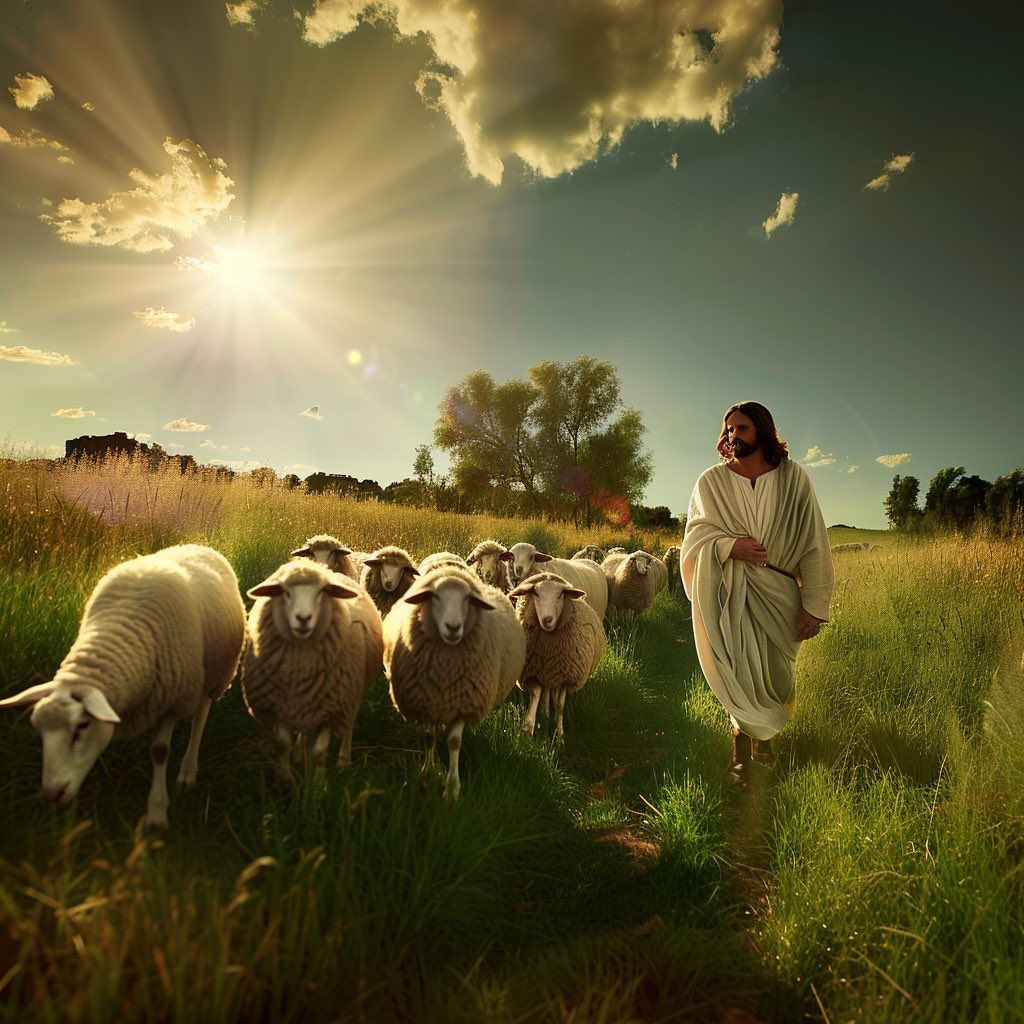
The Gospel taken from John is about Jesus the Good Shepherd. In the narrative, Jesus is part of a conflict with the religious authorities, which they have started with the man born blind after Jesus has restored his sight. When the authorities cast the man out, Jesus finds him and receives him as his own – his “sheep” the man born blind receives not only physical sight but also spiritual insight, while Jesus highlights that the religious authorities remain spiritually blind.
He used the image of the true, good shepherd on hand and the false shepherds who do not enter the sheepfold by the gate but climb in by another way, do not have the best interest of the sheep at heart; they steal, kill and destroy, while Jesus the Good Shepherd offers abundant life. While the hired hand, who does not care for the sheep because they are not his own, runs away when the wolves come, the good shepherd does not. The good shepherd lays down his life.
They are his sheep; they belong to him and they have an intimate relationship with him. Let us note this, the good shepherd sees and loves more deeply than other people see. Our primary vocation rooted in our baptism is also to follow the lead of our good shepherd by listening to his voice, we pray for the grace to recognize ways we might do this.
In the text, we hear about other sheep that do not belong to this sheepfold, who could this refer to? In the immediate context of the text, it would to the Gentiles. However, for us today, I believe it refers to all those who are not part of our church community. We need to remember that the mystical Body of Christ is inclusive of all people.
It is an invitation and a challenge to reach out beyond the borders of our church – for we can have a crippling effect on people when the stance we take towards them is lacking in generosity, is overly critical or dismissive, let us strive to see the signs of God in others and also in ourselves even when those signs of God are not all that obvious.
As I was reflecting on this text, I was deeply touched by the fact that there is someone who is willing to lay down his life for me. It was a special moment just to feel loved, to know that there is someone for whom I am important and so important that life can be sacrificed. It is quite an amazing feeling to experience being loved.
Quite often in our lives, there are moments of sadness, rejection, despair and hopelessness. Moments when we feel the absence of God as if God doesn’t care about what’s happening in my life. The text today assures us that Jesus cares.
Whiles we all may not have the courage and grace to lay down our lives for others. Let us try to become more loving people. Love has the power to do things which hatred does not. I pray that the experience of this personal love of Jesus may bring about a transformation which our world is so much in need of today.

 ANNUNCIATION DAILY ROSARY REFLECTION
Leave a comment